
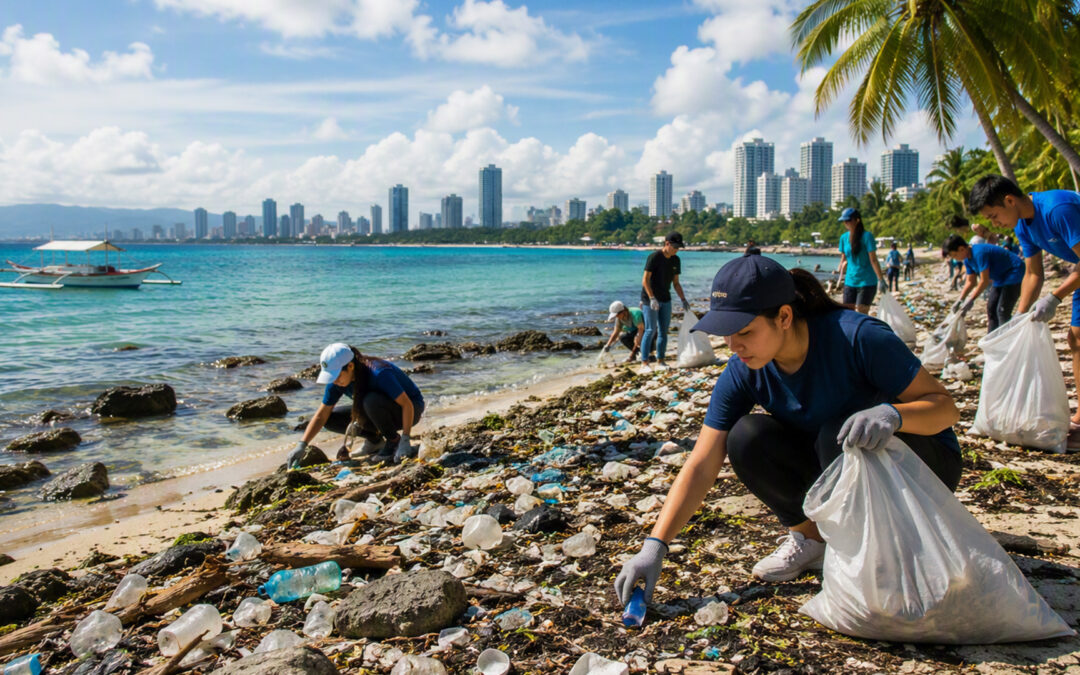
The first time I joined and helped organize an International Coastal Cleanup Day was in September 1997 when I was serving as the Station Commander of Coast Guard Station Iligan. Back then, our goal was not simply to encourage people to pick up trash along the shoreline. More importantly, we wanted to instill a deeper understanding of why proper waste management matters and how individual actions can affect the health of our marine environment.
Nearly three decades later, I often reflect on that experience whenever International Coastal Cleanup Day comes around. Much has changed since 1997. Our communities have grown, our economy has expanded, and technology has transformed the way we live. Yet many of the environmental concerns that inspired the cleanup movement decades ago remain with us today. Marine pollution continues to threaten coastal communities, fisheries, tourism, and the health of our oceans.
As we commemorate another International Coastal Cleanup Day and join millions of volunteers around the world, we are reminded that protecting the marine environment remains both an urgent responsibility and a shared obligation. The challenges may have evolved, but the need for collective action has never been greater.
For a country with more than 7,600 islands, the sea is far more than a geographical feature. It feeds our families, supports livelihoods, connects communities, drives tourism, and forms an integral part of our national identity. As Filipinos, our relationship with the ocean is deeply personal. Generations have depended on the sea for sustenance, transportation, recreation, and economic opportunity. The ocean has helped shape who we are as a people.
Yet the waters that have sustained us for generations are increasingly burdened by pollution, particularly marine litter. For many Filipinos, this problem is not an abstract environmental issue discussed only in conferences or scientific reports. It is something we encounter in our daily lives. Plastic bottles, food wrappers, sachets, discarded fishing gear, and other forms of waste can be seen along beaches, rivers, esteros, and canals throughout the country.
Every piece of litter found along a shoreline has a story. It may have started as a plastic bottle carelessly thrown from a vehicle, a snack wrapper discarded after a meal, or packaging left behind after a gathering. What appears to be a simple piece of waste on a beach often reflects a chain of decisions made far from the sea. A single piece of litter dropped on a street can be carried by rainwater into a canal, swept into a river, and eventually transported to coastal waters. Once there, it can harm marine life, damage habitats, and threaten the fisheries, marine ecosystems and tourism activities that many communities depend upon.
Recognizing that marine pollution is not a problem that can be solved by government alone, communities around the world have embraced volunteer-driven initiatives that encourage both action and awareness. Among the most enduring and successful of these efforts is the International Coastal Cleanup.
The Philippines has actively supported the International Coastal Cleanup for many years. Through Presidential Proclamation No. 470, the third Saturday of September was designated as International Coastal Cleanup Day in the country. Every year, the observance brings together national government agencies, local government units, schools, civic organizations, businesses, and thousands of volunteers who share a common commitment to protecting our marine environment.
Yet the true value of the International Coastal Cleanup goes far beyond the number of sacks filled with collected waste. Its greatest contribution is the awareness it creates. Cleanup activities help people understand that marine litter does not simply appear on beaches. By the time waste reaches the shoreline, it has already passed through homes, communities, drainage systems, rivers, and waterways.
This lesson is especially important for the Philippines. Protecting the ocean is not solely the responsibility of coastal communities. Even those living far from the shoreline influence the condition of our seas. Rivers, creeks, drainage systems, and waterways connect our homes, schools, offices, and communities to coastal waters. In many ways, caring for the ocean begins with how we manage waste wherever we live.
Another growing concern is the increasing presence of microplastics in our marine environment. Unlike larger pieces of plastic that can be collected during cleanup activities, microplastics are tiny fragments formed when plastic bags, bottles, sachets, food packaging, fishing gear, and other plastic products gradually break down under sunlight, waves, and weathering.
Scientists are increasingly concerned because these microscopic particles are now being found in coastal waters, sediments, fish, shellfish, and even in areas once considered relatively pristine. Marine organisms can ingest these particles, allowing them to enter the food chain. For an archipelagic nation that depends heavily on seafood for food security and livelihoods, this should be a matter of serious concern.
While consumers have a responsibility to dispose of waste properly, manufacturers of single-use plastic products must also become part of the solution. Companies that profit from plastic packaging should help reduce unnecessary plastic use, invest in environmentally sustainable alternatives, support recovery and recycling programs, and fully comply with the Extended Producer Responsibility Act. Protecting our seas requires shared accountability, from producers and retailers to government agencies, communities, and individual citizens. The environmental costs of plastic pollution should not be borne by the public alone.
The International Coastal Cleanup also demonstrates what can happen when ordinary citizens choose to work together. Every year, thousands of Filipinos volunteer their time to clean beaches, rivers, mangrove forests, and coastal communities. One person may collect only a few kilograms of waste, but when thousands act together, the impact becomes significant. More importantly, the effort sends a powerful message: environmental stewardship is a shared responsibility. Government agencies play a vital role, but so do citizens, schools, businesses, civic organizations, and community groups.
Equally important is the information gathered during cleanup activities. Volunteers do not simply remove debris; they also record and classify what they collect. These data do more than document litter. They provide evidence that can guide policy decisions, strengthen waste management systems, influence product design, identify emerging pollution trends, and support the implementation of Republic Act No. 9003, the Ecological Solid Waste Management Act of 2000. Such information also helps local governments and environmental managers develop more effective programs aimed at reducing single-use plastics and other forms of marine litter.
Experience has taught us that a clean beach after a single cleanup activity does not necessarily mean the problem has been solved. Coastal cleanups are most effective when they inspire lasting changes in behavior and community practices. The ultimate objective is not merely to remove waste already in the environment but to prevent it from reaching rivers, coastlines, and oceans in the first place. Achieving this requires responsible consumption, reducing unnecessary single-use plastic items, proper waste segregation, recycling whenever possible, community education, and reliable waste collection systems.
As a maritime nation, the Philippines has both a special responsibility and a compelling reason to protect its marine environment. Healthy oceans support fisheries, tourism, biodiversity, food security, and the livelihoods of millions of Filipinos. They also strengthen the resilience of coastal communities facing environmental and economic challenges. Every cleanup effort, no matter how small, reinforces the idea that the sea is part of our shared home and that its future depends on the choices we make every day.
More than forty years after the first International Coastal Cleanup was organized in Texas, its mission remains as relevant as ever. Marine pollution has not disappeared, but neither has the willingness of people to come together and make a difference. In the Philippines, the annual cleanup is more than a one-day environmental activity. It is an opportunity to reflect on the consequences of our habits, learn from the waste we collect, and commit ourselves to better practices moving forward.
When I participated in my first International Coastal Cleanup in Iligan nearly three decades ago, I hoped that greater awareness would inspire lasting change. Today, I remain convinced that every cleanup matters not because of the volume of trash collected, but because of the values it promotes. Every volunteer who gives time, every piece of litter removed, and every lesson learned represents another step toward protecting the seas that have sustained Filipinos for generations.
Ultimately, protecting the ocean is not only about removing trash from beaches and shorelines. It is about safeguarding the food we eat, the livelihoods we depend on, the communities we cherish, and the future we hope to leave for the next generation. The sea has always given so much to the Philippines. Protecting, preserving and conserving it is the most meaningful ways we can give back. My snappiest salute to all silent heroes who participated in our International Coastal Clean-up activity.
References
- Ocean Conservancy. (2026). International Coastal Cleanup®: Cleanups & ICC. Retrieved from the Ocean Conservancy website.
- Ocean Conservancy. (2026). Cleanup Reports and International Coastal Cleanup Data Releases. Retrieved from the Ocean Conservancy website.
- Ocean Conservancy. (2026). Trash Information and Data for Education and Solutions (TIDES) Database. Retrieved from the TIDES platform.
- National Oceanic and Atmospheric Administration (NOAA) Marine Debris Program. (2026). Collecting Marine Debris Data. Retrieved from NOAA Marine Debris Program.
- Schuyler, Q., Hardesty, B., Lawson, T., et al. (2020). A Global Assessment of the Relationship Between Anthropogenic Debris on Land and the Seafloor. Environmental Pollution.
- Ocean Conservancy. (2026). Report: New Beach Cleanup Report Reveals Plastic Beverage Bottles and Caps Most Prevalent Pollutants Worldwide.
- Ocean Conservancy. (2026). Charting a Course to Plastic-Free Beaches.
- Republic Act No. 9003. Ecological Solid Waste Management Act of 2000. Republic of the Philippines.
- Presidential Proclamation No. 470 (2003). Declaring the Third Saturday of September of Every Year as International Coastal Cleanup Day in the Philippines. (Referenced in your article.)
- UNEP. From Pollution to Solution: A Global Assessment of Marine Litter and Plastic Pollution — notes that plastics break down into microplastics that can be ingested by marine organisms and enter ecosystems.
- Philippine Institute for Development Studies (PIDS). Are Marine-Protected Areas Sheltered from Plastic Pollution? — discusses microplastic occurrence in Philippine waters and links it to single-use plastic waste.
- Republic Act No. 11898 (Extended Producer Responsibility Act of 2022) — establishes the responsibility of large enterprises to recover plastic packaging waste and support waste reduction efforts. Supported by discussions of EPR implementation in the Philippines.